


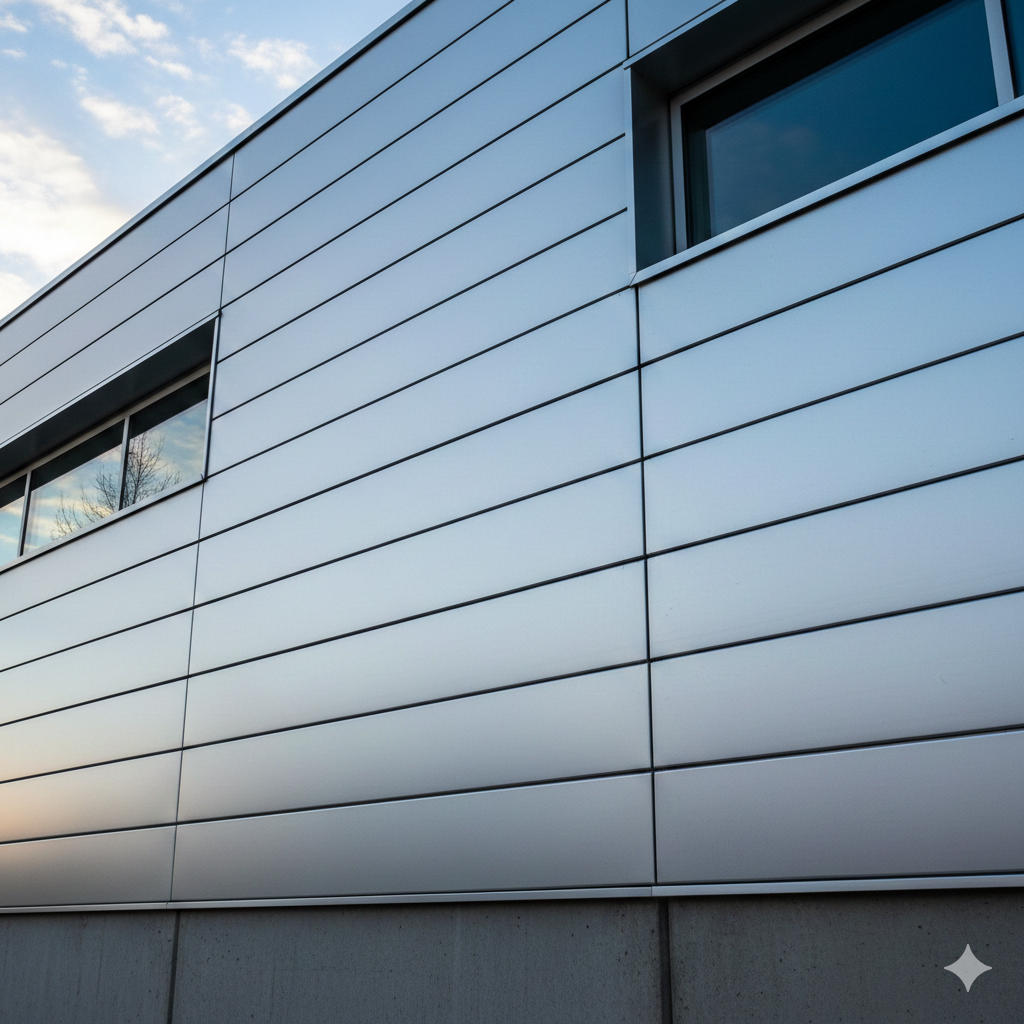
You need an aluminum composite panel manufacturer that delivers consistent quality, fire-rated cores, and precise finishes so your project meets both aesthetic and safety requirements. Choose a manufacturer that offers certified fire-retardant cores, durable aluminum skins, and reliable fabrication capacity to keep schedules and budgets on track.
This article will show how to evaluate manufacturers, compare product specifications, and match panel systems to applications from facades to signage, so you can make a confident, practical choice for your next build.
Choosing an Aluminum Composite Panel Manufacturer
Focus on measurable assurances, production abilities, and the exact product options you need. Prioritize manufacturers that document test results, state capacity and lead times, and list finishes, core types, and bespoke sizing.
Quality Assurance and Certifications
You should verify third-party test reports and certifications before you request quotes. Look for ISO 9001 for quality management, EN 13501-1 or ASTM E84 reaction-to-fire results for cladding, and ISO 14001 if environmental management matters to your project.
Ask for lab test certificates showing core combustibility, peel strength, and PVDF/coating weathering performance. Request batch traceability on coatings and substrate alloy (e.g., 3003-H14 or 1100) to ensure consistent corrosion resistance.
Inspect the manufacturer’s QA workflow: incoming inspection, in-process checks, and final dimensional and finish audits. Confirm tolerance charts, surface defect limits, and warranty terms in writing. If your project requires façade codes or LEED points, get documented evidence of compliance up front.
Manufacturing Capabilities
Check whether the factory handles continuous lamination, coil coating, and CNC routing in-house or outsources those steps. In-house coil coating and lamination reduce variability and speed up custom runs.
Ask about maximum panel dimensions, typical lead times for standard vs. custom colors, and minimum order quantities. Know their production capacity in square meters per day to match your project schedule.
Review tooling and automation levels: automated cutting and corner folding lower error rates; robotic handling reduces surface damage. Confirm capabilities for fire-retardant cores (FR), polyethylene (PE), and A2 non-combustible cores. Verify weather-resistance testing facilities or accredited partners for accelerated UV and salt-spray testing.
Product Range and Customization
You should confirm available core types, typical thicknesses (usually 3–6 mm), and face sheet alloys and thicknesses (commonly 0.3–0.5 mm). Ask the supplier for a color card and custom color matching process, including minimum quantities and color consistency tolerances (ΔE values).
Demand documentation on available finishes: PVDF, polyester, anodized, and textured options. Check whether they offer perforation, CNC cutouts, routed reveals, and bonded or mechanically fastened systems.
Clarify packaging, edge protection, and on-site handling guidance to prevent field damage. If you need bespoke profiles or integrated rainscreen attachments, request engineering drawings, load ratings, and samples before signing a production order.
Applications and Industry Solutions
Aluminum composite panels offer durable, lightweight cladding and visual options for building exteriors, signage, and specialized industrial uses. They provide fire-rated cores, high-quality finishes, and flexible fabrication for curved or flat installations that meet specific project requirements.
Architectural and Construction Uses
You can use aluminum composite panels (ACP/ACM) for building façades, curtain walls, soffits, and interior feature walls where flatness and uniform finish matter. Choose fire-retardant mineral or FR cores for mid- to high-rise exteriors to meet local code; polyethylene-core panels still suit low-rise applications and interior partitions.
Fabrication supports long, continuous runs and tight tolerances, so you can achieve crisp joints, concealed fasteners, or custom routed reveals. Finishes include PVDF and polyester paints, anodized looks, and textured options to match design intent and provide UV and weather resistance.
Installation methods include through-fastening, dry-joint rainscreen systems, and adhesive bonding for lightweight panels on steel or aluminum subframes.
Corporate Branding and Signage
You can rely on aluminum composite panels for storefronts, channel letters, wayfinding, and billboards due to their smooth face and color consistency. The panels accept digital printing, vinyl laminates, and precision routing, letting you reproduce corporate colors and logos accurately at scale.
ACP is lightweight, reducing support structure cost for large-format signs. Select high-durability coatings for exposed signage to minimize color fade and chalking. For illuminated applications, use fire-rated cores and proper backing to meet safety and thermal performance needs.
Industrial and Transportation Projects
You can apply composite panels on railcars, buses, truck bodies, and equipment enclosures where low weight and dimensional stability cut fuel and energy costs. Panels withstand vibration and permit composite sandwich construction for thermal insulation and impact resistance.
In plants and clean facilities, choose smooth, non-porous finishes for easy cleaning and chemical resistance. For transportation exteriors, prioritize corrosion-resistant faces and mechanically robust fastening systems to handle high-speed airflow and road debris.







Leave a Reply