


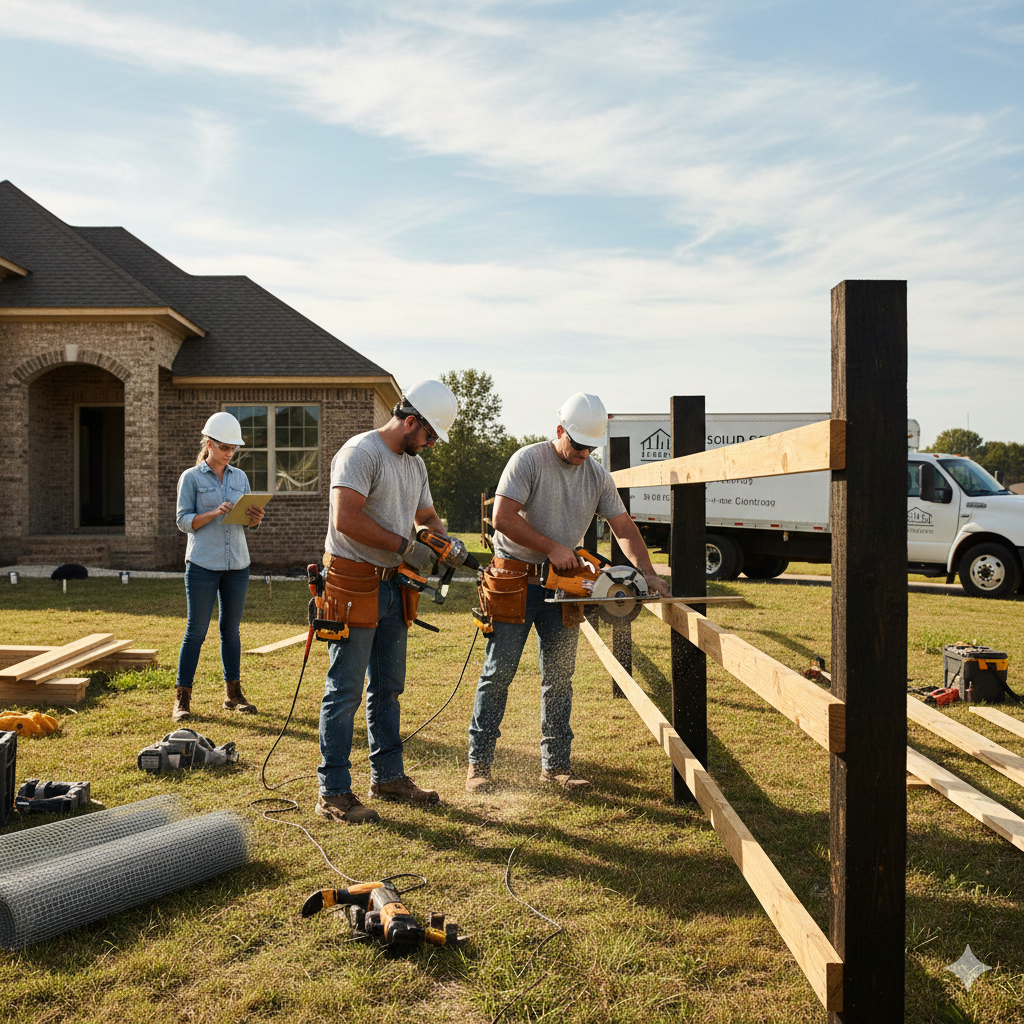
You want a fence that matches your budget, style, and purpose without surprises. A good fencing contractor handles design, permits, material selection, and professional installation so your project finishes on time and performs for years.
This article fencing contractors walks through common services contractors provide—from privacy and security options to wood, vinyl, and metal installations—and shows how to evaluate experience, warranties, and local licensing to protect your investment.
By the end you’ll know how to compare quotes, spot red flags, and pick the contractor who delivers the right fence for your property and priorities.
Services Offered by Fencing Contractors
You can expect services that address privacy, security, curb appeal, and long-term durability. Contractors commonly handle design, material selection, permitting, installation, and ongoing upkeep.
Residential Fencing Solutions
Residential work typically includes wood, vinyl, aluminum, wrought iron, and chain-link fences tailored to yard size, property lines, and local bylaws. Contractors will measure your lot, mark setbacks, and recommend materials based on budget, maintenance needs, and desired lifespan.
You’ll get options for privacy panels, picket styles, decorative gates, and noise-reduction designs. They can install pressure-treated posts, concrete footings, and treated rails to resist rot and shifting in freeze–thaw climates.
Expect scheduling for a site visit, a written estimate that lists materials and labor, and coordination of any required municipal permits. Many contractors also offer custom gates, stain/paint finishes, and landscape-friendly installation that preserves established trees and irrigation lines.
Commercial Fencing Installations
Commercial projects prioritize security, access control, and code compliance; contractors focus on chain-link, steel palisade, security mesh, and high-rise railing systems. You’ll receive solutions that integrate electronic gates, card readers, bollards, and anti-climb features when needed.
They handle site surveys for line-of-sight, easement restrictions, and ADA requirements. Foundation work and heavy-gauge posts are standard to meet wind-load and impact specifications for industrial or institutional properties.
Contractors typically provide phased installation plans to minimize business disruption, coordinate with site managers, and supply documentation for warranties, certification, and inspections required by insurers or local authorities.
Fence Repair and Maintenance
Repair services cover rot replacement, post straightening, rail and panel swaps, hinge and latch repair, and rust treatment for metal fences. Technicians diagnose cause—soil movement, moisture, or hardware failure—and recommend targeted fixes rather than full replacement when viable.
Maintenance plans often include staining or sealing wood, power washing, tightening fasteners, and re-setting concrete footings. You can contract seasonal checkups that extend fence life and preserve appearance.
Many contractors offer emergency repairs after storms, provide written repair estimates with parts and labor separated, and can match existing materials or suggest upgrades like galvanized hardware for longer life.
Choosing the Right Fencing Contractor
Check credentials, inspect past work, and read verified customer feedback. Focus on contractors who match your project type, materials, timeline, and budget.
Qualifications and Experience
Look for contractors who specialize in the fence type you want—wood, vinyl, chain-link, aluminum, or custom ornamental steel. Ask how many years they’ve installed that specific material and request examples of similar jobs in comparable yard conditions.
Confirm they handle site-specific challenges like slope grading, buried utilities, and local setback rules. Experienced crews will explain post spacing, footing depth for your frost line, and gate hardware options without guessing.
Request a written scope that lists materials, brands, fastening methods, and a clear timeline. Contractors who train crews in manufacturer installation specs tend to produce fewer callbacks. Also ask about warranties on workmanship versus manufacturer warranties on materials.
Licensing and Insurance
Verify the contractor’s business license and any specialty contractor certifications required by your city or county. Licensing indicates they meet local business and trade standards and can often be checked online through municipal portals.
Require proof of general liability insurance and workers’ compensation before work begins. Liability protects your property from accidental damage; workers’ comp protects you from claims if a worker is injured on your site.
Get policy details in writing: insurer name, policy number, coverage limits, and effective dates. If the contractor uses subcontractors, confirm each subcontractor is also insured. Consider asking for an additional insured endorsement naming you for the duration of the project.
Portfolio and Customer Reviews
Review recent photos or an online gallery showing complete jobs—look for clean post alignment, consistent rail heights, and neat gate installations. Photos that include before-and-after shots and close-ups of post footings reveal installation quality.
Read reviews on independent platforms, not only the contractor’s website. Pay attention to comments about punctuality, communication, handling of unexpected site issues, and follow-up on warranty claims.
Contact at least two past clients for projects similar to yours and ask specific questions: did the crew meet the agreed timeline, were change orders documented, and how did the contractor address any defects? Favor contractors who provide references and documented project checklists.







Leave a Reply